Parking Lot Construction and Paving in Aurora and the Southeast Metro
New and replacement asphalt and concrete parking lots for retail, medical, school and multifamily properties in Aurora, Centennial, Parker and Lone Tree.
Southlands opened in 2005 at Smoky Hill Road and E-470 with 1,700,000 square feet of floor area, and every square foot of it depends on parking that works on a Saturday in December. A parking field is the first thing a customer, patient or resident touches, and it is also the surface that takes the most weather, the most salt and the most turning tires. When it fails, the owner hears about it immediately.
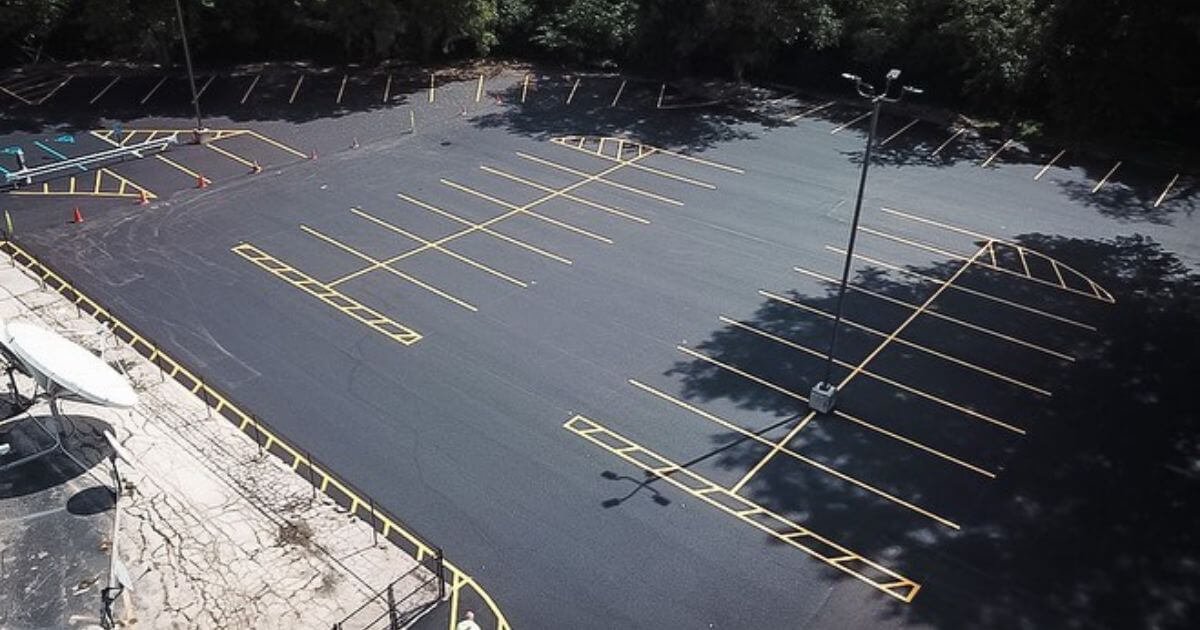
We build new parking lots for retail centers, medical offices, schools, apartment communities and employers, and we replace worn ones in stages so tenants stay open. The work covers subgrade preparation, aggregate base, asphalt or concrete paving, curb and gutter, accessible stalls, striping, signage and the conduit that supports lighting and future electric vehicle charging.
Good parking lots are designed by engineers and built by crews who understand how water, soils and traffic will treat the pavement over time.
What goes into a parking lot beyond the asphalt
The visible surface is the last step of a long sequence. Utilities and storm drainage are installed first, and island curbs and gutters are formed and poured on a prepared subgrade. The aggregate base is placed in lifts, compacted and tested, and then proof-rolled so soft spots are found before paving. Hot-mix asphalt arrives from the plant at temperature and must be placed, rolled and finished within a limited window, so we coordinate truck cycles, paving equipment and weather carefully.
Details matter at the edges. Accessible stalls, ramps and routes must meet the slope and width requirements the inspector will check, striping must match the approved site plan, and signage needs to be located where sight lines and landscape allow. Drainage must be verified before the final lift: water trapped in a drive aisle will pave a hard-to-fix birdbath. Our work with stormwater and drainage keeps the inlets and gutters where the plan calls for them.
Reviews that touch a parking field
Parking lots are reviewed in several places. The site plan sets the stall count, aisle widths and landscape requirements, the drainage report sets grades and inlet locations, and the building department inspects accessible routes and any lighting or electrical work. Because state energy code changes under HB22-1362 require jurisdictions that update a building code after July 1, 2023 to adopt the state model electric and solar ready code, electrical conduit for future charging is becoming a normal conversation at plan review.
Each jurisdiction in this metro has its own approach, so we confirm requirements early. A reviewer may ask whether a stall count meets the parking table, whether the landscape islands match the approved plan, or whether the lot slopes drain to a permitted outfall. We prepare answers before submission, which shortens review rounds and keeps the schedule on track.
Paving windows and keeping a property open
Asphalt cannot be placed on frozen ground or in cold weather, and in this climate the paving season shapes the entire project schedule. We aim to finish subgrade, utilities and curb by early fall so that paving can proceed in the best weather. If a lot must be completed in cold months, we discuss alternative sections, concrete paving or a temporary surface with a final lift in spring.
On occupied properties we build in sections. A medical campus, school or retail center needs entrances, accessible routes and emergency access maintained at all times, so we sequence work around peak hours and communicate changes with signs, barricades and tenant notices. Our methods draw on the practice described under phased construction on occupied sites.
Where parking lot dollars go
Pavement section thickness, base depth, subgrade stabilization and the quantity of curb and gutter set the cost of a lot. The price of asphalt fluctuates with oil and aggregate markets, so we state how long a bid holds and what escalation applies. Lighting, striping and landscape islands add to the total, and so do the number of drainage structures and accessible ramps.
A lot designed for car traffic should not be built like a truck court. We separate heavier sections for dumpster pads, delivery lanes and fire access from lighter sections for stalls, and we recommend concrete at locations where asphalt would rut, using the same logic we apply to truck courts and dock aprons. When owners evaluate options such as milling and overlaying an existing lot versus full reconstruction, we provide a candid look at the base condition before recommending the cheaper route.
Who we pave for
Retail owners ask for lots that stay striped and smooth for customers; hospital and medical campus owners ask for safe pedestrian routes and staff parking; school districts ask for bus lanes, pickup loops and durable pavement. At the University of Colorado Anschutz Medical Campus, with nearly 25,000 faculty and staff, parking demand shapes how the campus grows, and the same logic applies to employers elsewhere in the metro.
We work with property management firms on restriping, resurfacing and repair programs, and with retail chains on new-store pads and parking improvements. Large destinations such as the 85-acre Gaylord Rockies development, which totals about 1,965,000 square feet of hotel, retail, commercial and convention space, show how much pavement a single project can require.
Plan the lot before you plan the paving date
Send the site plan and tell us about your tenants, and we will propose a section, a phasing plan and a price. Our experience with large centers near Southlands and on medical campuses helps us anticipate the questions reviewers will raise.
Questions Owners Ask
How long does a new asphalt parking lot last?
With a sound base, proper drainage and periodic sealing and crack repair, many lots serve for 15 to 25 years before major rehabilitation. Heavy truck traffic, poor drainage and weak subgrades shorten that life. We recommend maintenance programs that match your budget and the pavement's age.
Is it better to mill and overlay or to reconstruct?
If the base is sound and cracking is mostly at the surface, a mill and overlay is cost effective. If the base has failed, with deep ruts, alligator cracking or standing water, patching and overlaying will not last. We core and probe the pavement before recommending an approach.
When is the paving season in this metro?
Generally from spring through early fall, when temperatures allow proper compaction. Cold nights and wet weather can shorten the season. We plan critical paving early and keep alternates ready for late-season work.
What does it take to bring an older lot up to current accessibility rules?
Scope depends on the number of stalls, ramps and signs required. We measure existing slopes, lay out compliant stalls and aisles, and flag conditions that need concrete work, because paint alone cannot fix a ramp that is too steep. The price follows from that survey, so we measure before we quote.
Can you build the lot in stages while the property stays open?
Yes. We divide the lot into zones, keep access and fire lanes open, and use temporary striping and barricades. Staging does add mobilization costs, but it protects tenant sales and patient or student access.