Site Development and Utilities in the Aurora Metro
Grading, water, sewer, storm and dry utilities, detention and paving for new commercial, industrial and residential sites in Aurora and the east metro.
Nearly 4,000 acres, 22 miles of trails and 13 parks is how the Aurora Highlands community authority describes a project that mixes residential, commercial, recreational, open space and institutional uses. Before any one building can stand on land like that, someone has to grade it, drain it, bring water and sewer to it and build the streets that reach it. That work, usually called site development, decides what the land can hold and how soon.
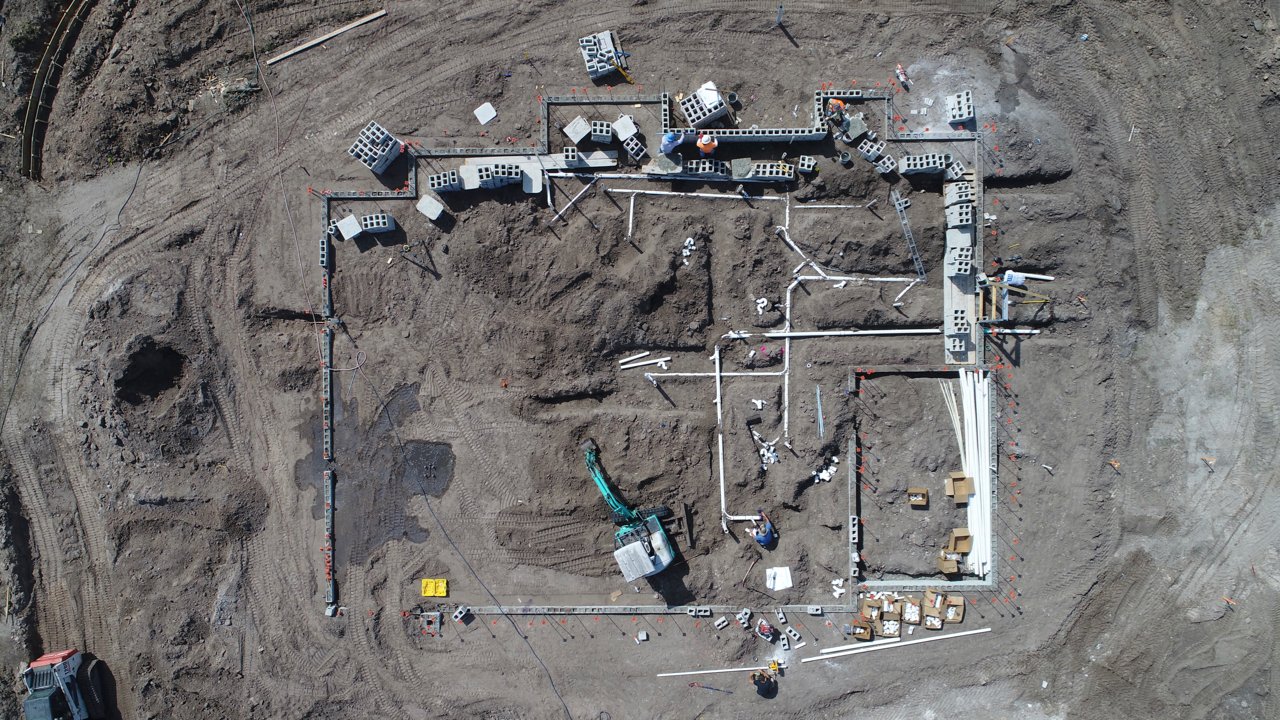
Site development covers everything between raw ground and a pad ready for a foundation: clearing, earthwork, erosion control, storm drainage and detention, water and sewer lines, dry utilities, curbs, paving, and the connections to existing systems. It is also the part of a project most exposed to weather, to inspectors from several agencies and to unknown conditions underground.
We build site improvements for developers and owners, either as a separate contract ahead of vertical construction or as part of a complete project.
Why east metro sites ask more of the site contractor
Much of the east metro is open land being planned and developed in large pieces. Water, sewer and storm infrastructure often has to be extended a long way before a parcel is usable, and the cost of that extension is carried by the project that triggers it.
Growth also means shared infrastructure. The Aerotropolis Regional Transportation Authority is building roads across about 21,000 acres south of Denver International Airport, and the Aurora Highlands E-470 interchange opened in June 2024. Developers who build near such improvements need a contractor who knows how to tie their site into roads and utilities that are still being built by others.
Earthwork, utilities and pavements
A typical scope starts with clearing and mass grading, then moves to underground utilities: storm sewer, sanitary sewer, water mains and services, fire lines, and conduit for power, gas and communications. Detention ponds and water quality features are built early, because they also serve as sediment basins during construction.
Once utilities are in, we place subgrade, aggregate base and pavement, build curbs, gutters, sidewalks and ramps, and finish with landscaping and erosion control. Drainage design runs through all of it, and our stormwater and drainage work is planned with the grading from the start, not added after the pad is cut.
Permits, inspections and agencies
Site work involves more agencies than building work does. The city or county reviews grading and drainage, the water and sewer provider reviews connections and inspects lines, the fire authority checks hydrants and access, and state rules govern construction stormwater. Each has its own forms, fees and inspection steps, and each can hold up the next.
Jurisdiction matters. Watkins, for example, is an unincorporated community of nearly 25 square miles that borders Aurora, and because it reverted from town status in 2006, county rules apply there. We find out early whether a parcel falls under a city, a county or a special district, and prepare the submittals to match. This is part of the process described under permitting and entitlements.
Water, floodplains and what lies underneath
Protecting water is a real constraint here. Aurora Reservoir, which sits in the far southeastern part of the city at a surface elevation of 5,950 feet, provides drinking water to Aurora, and only electric boats are permitted to protect water quality. Sites near water supply facilities draw closer review of runoff, sediment and spills, and we plan erosion control and fuel handling with that in mind.
Flood control is the other side. Cherry Creek Dam, built by the U.S. Army Corps of Engineers in 1948 to 1950, is 141 feet high and impounds Cherry Creek for flood control, and drainage ways across the metro are shaped by that history. We check floodplain maps, drainage easements and downstream capacity before design, since these set the grading, the detention volume and the pad elevations.
Managing the crews on site
We schedule and supervise the earthwork, utility installation and flatwork trade partners. That keeps control of the sequence, so utilities go in ahead of the base course and compaction tests are taken as each lift is placed. A dependable crew on the underground work pays off the first time the weather turns.
Quality control is built in: compaction testing, pipe inspection, pressure and mandrel tests on utilities, as-built surveys and documentation of every inspection, so an agency's acceptance walk finds the paperwork and the pipe in agreement. Records go to the owner at closeout, and the same data helps when a city accepts the improvements for maintenance.
Seasons, sequencing and utility lead times
Earthwork and paving follow the weather. We plan the heaviest grading for the dry months and schedule paving for temperatures that allow it. Winter work is possible but slower, and we advise owners when it is wise to hold a pour or a paving date.
Utility lead times can be longer than construction. Pipe, valves, structures and electrical equipment have to be ordered, and the serving agencies need to schedule inspections and connections. We map those dates onto the project schedule early. If a building contractor is following us, we coordinate the handoff of the pad and the utilities so vertical work starts when the site is ready.
Where we do site work
We prepare sites throughout Aurora, in Aurora Highlands, around the Aurora Reservoir area, and out to the east plains and the Bennett and Watkins corridors. The Cherry Creek State Park area and its drainage influence work on the south side.
Our clients include commercial real estate developers who need pads delivered on schedule and owners who need a single contractor from the first cut to the last building.
Walk the site with us
Send us the survey, the geotechnical report and the plan. We will walk the site, flag the utilities and drainage questions and give you a schedule.
Questions Owners Ask
How early should a site contractor be involved?
Before the civil design is final. A contractor can tell you whether a grading plan balances, whether a utility route is practical and how pipe depths and detention affect cost. Changes at this stage cost little, while changes after bidding cost much more.
What causes the largest site cost surprises?
Unsuitable soils, high groundwater, off-site utility extensions and drainage requirements from downstream. The geotechnical report and the utility will-serve letters are the best predictors. We read both before we price.
Can site work start before the building permit?
Often, with a separate grading or site permit. This lets earthwork and utilities begin while the building review continues. The owner accepts some risk if the building design changes, and we help judge whether that risk is acceptable.
Who inspects utilities, and what do they test?
The serving water and sewer provider, the city or county, and sometimes the fire authority. Typical tests are pipe pressure tests, sewer mandrel and camera inspection, and compaction testing. We schedule these inspections and keep records for turnover.
What does erosion control involve during construction?
A plan under the state stormwater permit, with perimeter controls, sediment basins, stabilized entrances and routine inspections after storms. We install and maintain the controls and keep the records the regulations require.