Automotive and EV Plant Construction in Aurora and the East Metro
Automotive and EV plant construction on the east metro I-70 and E-470 corridors, with rail-served sites, utility sequencing and phased expansion planning.
Battery modules, body-in-white lines and final assembly halls all put the same first question to a site: how much level, serviceable ground can be tied to power, rail and a highway ramp? On the east side of the metro that question gets a workable answer more often than newcomers expect. Near the Colorado Air and Space Port, Adams County has a 620-acre rail-served industrial park beside the airport, and a separate 6,500-acre master plan runs along the Union Pacific line mostly north of I-70.
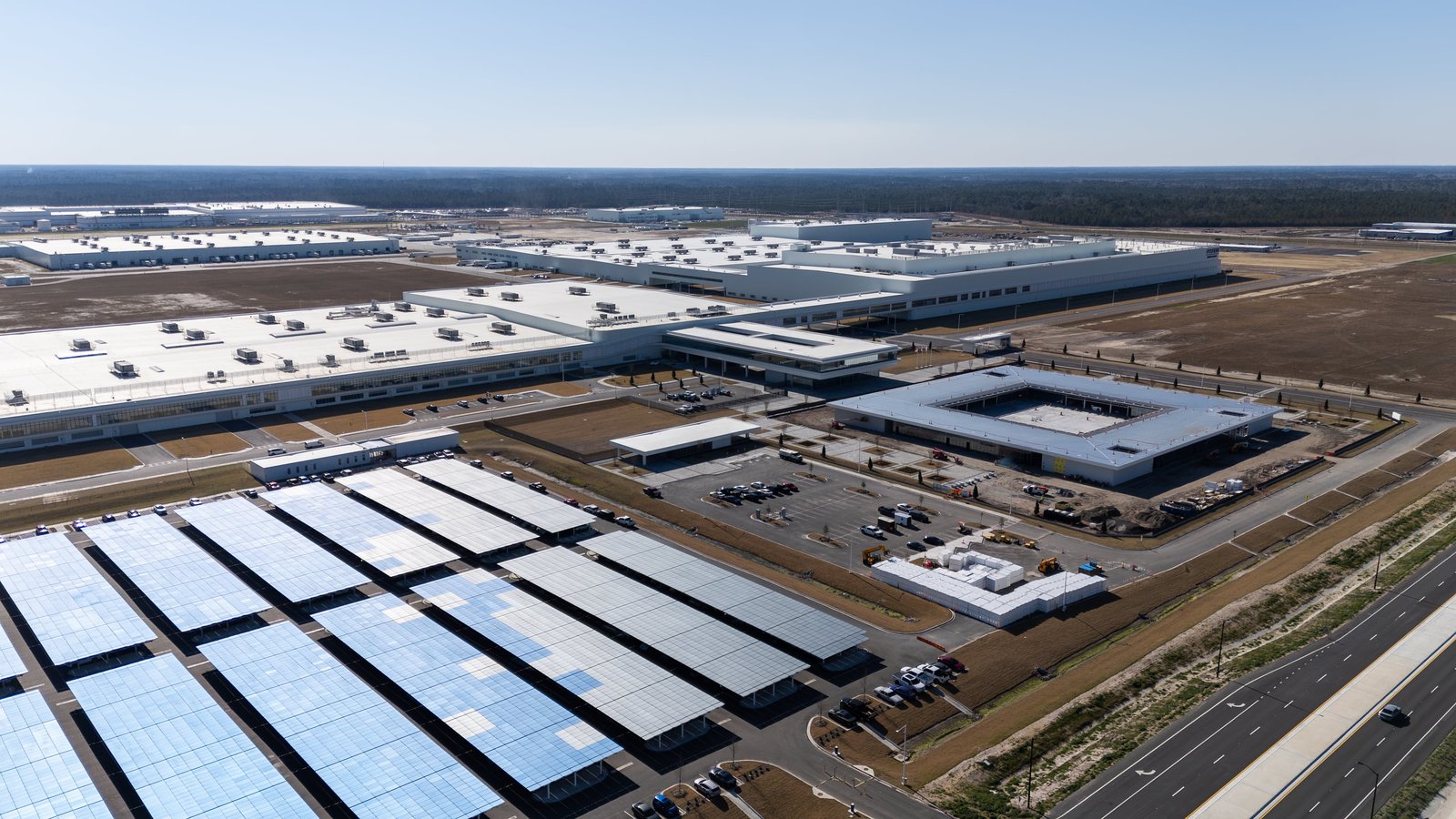
Automotive and EV plants are not warehouses with taller doors. The structural frame needs long clear spans and crane runways, the slab carries vehicle and equipment loads plus embedded trenches and pits, and process utilities have to be roughed in on the same calendar as tooling release. Paint and battery areas also need to be enclosed, dry and clean well before the first piece of equipment arrives. We plan those dependencies in preconstruction so the shell does not finish ahead of the people who will fill it.
Most owners in this metro will begin with a supplier building rather than a full assembly campus: a component plant, a pack-assembly hall or a service and remanufacturing facility. We treat those as the first phase of something larger and set the utility corridors, truck court geometry and pad grading so a second and third phase can be added without tearing up the first.
Where heavy manufacturing is landing on the east side
The east metro does not have a vehicle assembly plant in its factbase, and we would not pretend otherwise. What it does have is the kind of land and infrastructure that heavy industry screens for. In Brighton, two plants making wind turbine blades and nacelles represent about $290 million of investment and 1,350 jobs, which shows that large-format, crane-served manufacturing already works in the northern part of the metro.
Adams County economic development officials have told reporters they are targeting healthcare, advanced manufacturing and aviation and aerospace along I-70 near Bennett, next to the airport. South of Denver International Airport, the Aerotropolis road program covers roughly 21,000 acres, with studies citing 40 million square feet of industrial and commercial space at build-out. For a buyer, that means entitled, road-served acreage is being created now, and the work is figuring out which parcel suits an assembly or battery program.
Approvals for a large industrial occupancy
Colorado has no single commercial code. Adopted editions are set city by city and county by county, and the same industrial site can fall under very different rules depending on the line it sits on. The Home Builders Association tracker dated January 20, 2026 shows Adams County on the 2018 I-codes while adopting the 2024 set, Aurora and Arapahoe County on 2021, and Bennett on the 2024 IBC, effective January 1, 2026. A plant straddling a parcel boundary may need that sorted out before design starts.
Process buildings also bring a second review track that has nothing to do with the code edition. Hazardous materials inventories for battery cells and electrolyte, fire flow and sprinkler design for high-piled storage, stormwater and spill containment, and energy compliance all get separate comments. Under HB22-1362 any jurisdiction updating its code on or after July 1, 2023 must adopt an energy code at least as strong as the 2021 IECC, so we ask early which edition the reviewing authority is actually enforcing.
What we build inside the fence
On the structure, we coordinate steel erection and precast or tilt-wall panels, with a tilt-wall building the usual answer for perimeter walls where the owner wants speed and a durable skin. Interior bays take heavy mezzanines, overhead crane beams and equipment bases. Floor slabs get the attention they deserve: flatness, joint layout, curing and the pit and trench formwork that tooling suppliers send late and expect to be exact.
We also take on the site work that outsiders underestimate, from the site utilities and civil package that feeds a new plant to truck courts built for repetitive trailer traffic and employee parking sized to a shift change. Where the owner has an existing manufacturing plant to expand, we phase the new work around production so the line keeps running.
Sequencing against tooling and equipment
The schedule on an automotive project is driven by what arrives, not by what we pour. Switchgear, transformers and rooftop units can run for many months, so we pull long-lead procurement into the first weeks and keep equipment dates in the master schedule beside the pours. Utility service from the local provider is the other early gate, and we open that conversation before the building is fully designed.
A realistic sequence is site and utilities first, slab and structure next, then envelope and dry-in on a firm date so interior trades and equipment setters can work out of the weather. We carve the building into turnover zones, so a paint booth supplier or battery line integrator can begin while other areas are still being finished. Daily coordination with the owner's tooling team keeps the handoffs from becoming change orders.
What moves the number
Three items usually separate a clean budget from a surprised owner: the slab and foundation system, the electrical service, and the process piping and exhaust that the base building has to accommodate. The first depends on geotechnical findings across the parcel, since much of Colorado sits on potentially expansive clay and soil movement of 3 percent or more is considered damaging. The second depends on the utility, and the third depends on the final equipment list.
We price in layers: a base building the owner can bid with confidence, then allowances and alternates for the items that will still be moving. Owners who also have a distribution or parts operation next door often want to compare the tradeoffs with a logistics and fulfillment center on the same parcel, and we price both so the decision is made on real figures. Our manufacturing client work follows the same layered approach.
Tell us about the program
Send us the site, the process outline and the target start, and we will return a sequenced plan and a budget range that shows which approvals and long-lead items control the date.
Questions Owners Ask
Which east-metro sites are realistic for an automotive or battery plant?
The strongest candidates are large, level parcels with rail or planned rail and quick interstate access, such as the acreage along I-70 beside the Colorado Air and Space Port and the road-served land in the Aerotropolis program. Brighton's northern corridor also has proven heavy manufacturing. We screen each parcel for utility capacity, floodplain, soil conditions and jurisdiction before any design money is spent.
Does the building code edition change how we design a plant?
Yes, because adopted editions differ by jurisdiction, from the 2018 I-codes in parts of Adams County to the 2021 set in Aurora and the 2024 IBC in Bennett. The edition affects fire separations, egress, structural loads and energy requirements. We confirm the enforced edition and any local amendments in the first weeks of preconstruction.
How long does a supplier plant take from groundbreaking to equipment move-in?
It depends more on utility service and equipment lead times than on the building itself. We build the schedule backward from the date tooling arrives, then set dry-in and interior readiness ahead of it. With early procurement of switchgear and rooftop units, owners generally avoid the stall where a finished shell waits on power.
Can the plant be built in phases?
Yes, and we recommend it when the first tenant or program is still scaling. We size utilities, truck courts and stormwater for the full campus, build the first phase on a clean perimeter, and leave the expansion side free of permanent structures. That keeps the second phase from disturbing operating production.
What are the biggest unknowns at budget stage?
Soil movement, electrical service and process exhaust. We carry geotechnical allowances where borings are not complete, ask the utility for a written service letter early, and hold design allowances for the equipment-driven items until the owner's process engineers fix their layout.