General Contractor Along the E-470 Corridor
Warehouse, retail, hotel and commercial construction along E-470 in Aurora, planned around interchange access, truck routes and toll logistics.
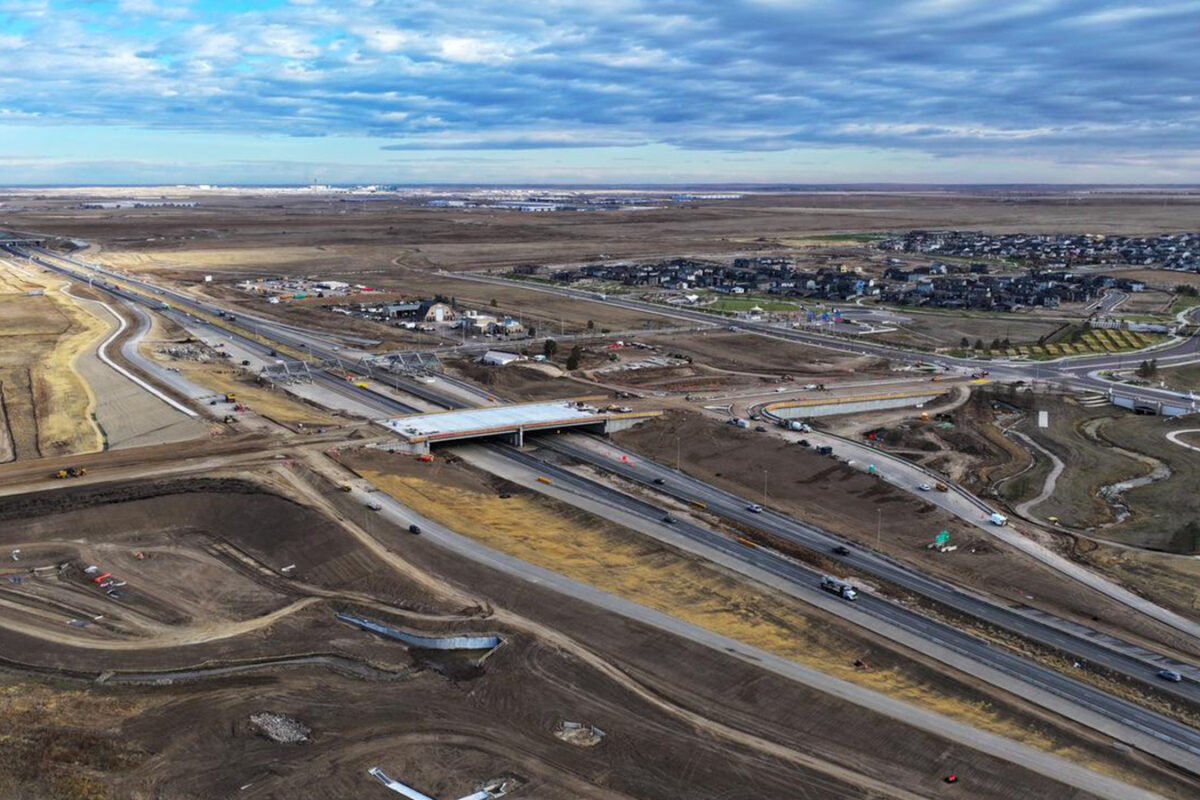
Interchange geometry decides more about an E-470 site than the land around it does. A parcel with a clean ramp, a signal-free frontage road and room for a truck to turn is worth more than a larger parcel that forces every vehicle through a neighborhood. We read the access before we read the survey, and we tell owners what the ramp and the frontage will allow before they commit to a building size.
E-470 is a 46.950 mile tollway. Its first section, from I-25 to Parker Road, opened June 1, 1991, and the northern link to I-25 in Adams County opened January 3, 2003. Aurora's exits are Smoky Hill Road (exit 10), Quincy Avenue (exit 13), 6th Parkway/Stephen D. Hogan Parkway (exit 19) and I-70/Colfax Avenue (exit 20), with Peña Boulevard at exit 28 serving Denver International Airport.
Each exit supports a different kind of development, and we build for the ones our clients choose: distribution and light industrial, big-box and neighborhood retail, hotels, offices and housing. The sections below describe how we handle the corridor.
One road, several markets
The corridor's exits sit in distinct settings. Smoky Hill Road at exit 10 serves the Southlands shopping district and the housing around it. Exit 13 at Quincy Avenue and exit 19 at 6th Parkway pass the east side of the Buckley Space Force Base area. Exit 20 at I-70/Colfax Avenue connects two major routes, and exit 28 at Peña Boulevard leads to the airport.
The road itself has changed. In 2006 the mainline moved about one-quarter mile west to bypass signalized intersections near its fly-by interchange with I-70. That kind of realignment is a reminder that parcels near interchanges can be reshaped by roadwork, so we ask the authority and the city about planned changes before an owner buys.
Warehouses, retail and hotels
Distribution users look for beltway access and truck-friendly sites. A distribution center needs a dock layout, trailer parking, a truck court of the right depth and an office that does not interfere with the flow. We design the schedule around the structure, the slab and the dock package, because those set the delivery date.
Retail and hospitality buildings want visibility and an easy turn. Our hotel construction experience covers timelines driven by franchise requirements and furniture deliveries, while retail pads are sequenced around the landlord's site work. Both depend on a clean entrance, which means early coordination with the city on access permits.
Toll roads and truck routes
The E-470 Public Highway Authority operates the road with 19 ramp toll interchanges and five mainline toll gantries, and it takes no cash. That detail matters for the trucks we schedule: carriers need transponders or accounts, and tolls become a line in the delivery cost. We ask suppliers about tolling at the bid stage, so there is no argument later.
Ready-mix and aggregate haul times are another variable. A concrete pour that depends on a 30-minute window can be put at risk by a crash on a nearby interstate, so we confirm backup plants and alternate routes. For a large slab or tilt panel casting, we arrange a standing plan with two suppliers.
What an owner should price
Access is the biggest corridor-specific cost. A parcel may need a turn lane, a signal contribution, a deceleration lane or a frontage improvement before the city issues a certificate. Those items can be a large share of the site budget, so we ask for the traffic study early and price its recommendations.
The second is utilities. Parcels near the beltway may be far from existing mains, and extensions of water, sewer and power can drive the date. Truck courts and dock aprons are the third cost, since heavy concrete pavement is expensive and its quality determines long-term maintenance. We show each of these as its own line.
From Smoky Hill to the airport
We build along the whole length in Aurora. In the south, we work near Southlands and the Aurora Reservoir area. In the north, we work toward Aurora Highlands and the airport. Our superintendents are used to the traffic pattern.
The Authority's governing board has eight elected officials, one from each of eight member local governments, so roadside work can involve more than one jurisdiction. We identify the right contact for each parcel, whether it is the city, a county, a metropolitan district or the Authority itself.
Site and structure work we keep close
For industrial and commercial sites along the corridor, we directly supervise the site-critical tasks: grading and subgrade preparation, slab and paving placement, tilt panel setting and exterior sitework. These tasks decide quality, and they often decide schedule. Our superintendents are present for each pour and each panel pick.
We also coordinate the work of logistics and distribution owners with their equipment installers, since racking, dock levelers and conveyors must meet the slab tolerances and the floor schedule. Early meetings with those installers avoid conflicts that otherwise appear after the concrete is set.
Build along E-470
Give us the exit, the parcel and the use. We will review access, utilities and review path, and return a budget and schedule that separate site work from the building. If you are comparing two or three corridor sites, we will do the same for each.
Questions Owners Ask
Which E-470 exits serve Aurora?
Aurora's exits are Smoky Hill Road (exit 10), Quincy Avenue (exit 13), 6th Parkway/Stephen D. Hogan Parkway (exit 19) and I-70/Colfax Avenue (exit 20). Peña Boulevard at exit 28 serves Denver International Airport. Each area has a different mix of land uses, so we recommend visiting at the times your customers or trucks will use the site.
Do tolls affect construction costs?
They can, in a small but real way. The road has 19 ramp toll interchanges and five mainline toll gantries and accepts no cash, so trucks need accounts or transponders. We include tolling in trucking quotes and ask material suppliers to disclose any surcharge. For a project with many deliveries, the sum is worth tracking.
How early should we study access for a corridor parcel?
Before purchase, if possible. A traffic study and a conversation with the city can show whether a turn lane, a signal or a frontage improvement will be required. Those items can change the value of the land. We offer a quick access and site review that identifies the major risks before you close.
Can the corridor support both warehouses and hotels?
Yes, though not at the same exit in the same way. Warehouses prefer sites with truck access and fewer neighbors, while hotels prefer visibility and quick turns. We help owners match a use to an exit, and we describe the construction cost and schedule that each choice implies.