Commercial and Industrial Construction in Strasburg
Commercial, agricultural-support and light industrial construction in Strasburg along I-70, with county-level permitting across Adams and Arapahoe counties.
The first question on a Strasburg project is rarely about the building. It is which county reviews it. Strasburg is unincorporated and spans Adams and Arapahoe counties, so two agencies, two code histories and two sets of fee schedules can apply depending on where a property line falls. We resolve that on day one, and we build the rest of the plan around the answer.
Strasburg lies along the I-70 corridor east of the metro, and it had 3,307 residents at the 2020 census. The area covers 20.830 square miles at an elevation of 5,414 feet, which means wide parcels, long utility runs and distances that affect everything from concrete delivery to inspector scheduling. Owners who succeed here treat location as a construction input, not an afterthought.
Rail history also shaped the settlement. The town was built beside the Comanche Crossing of the Kansas Pacific Railroad and is named after railroad official John Strasburg. Freight movement still matters to the corridor, and we help owners decide whether a building should be oriented to the highway, to a rail line or to both.
Two Counties, Two Sets of Requirements
The Home Builders Association of Metro Denver tracker dated January 20, 2026 lists Arapahoe County on the 2021 IBC with an update expected in the 2027 cycle, and Adams County on the 2018 IBC while adopting the 2024 I-codes. Because Strasburg is unincorporated, those county entries are the ones that matter. We read the edition that applies to your parcel, then confirm the effective dates, because a permit filed just before an adoption date can be reviewed under different rules than one filed just after.
Colorado's energy law adds another layer. Jurisdictions that update their codes after July 1, 2023 must meet the 2021 IECC at minimum, with a low energy and carbon benchmark following from July 1, 2026. We build the energy compliance path into the schedule instead of treating it as a late checklist item. For help with applications and agency meetings, see our permitting and entitlements service.
Reaching Strasburg From the Metro
Strasburg is a long drive from most subcontractors' yards, so we address mobilization at the start of the bid process. We set up site offices, storage and temporary power early, then organize trades to work in blocks of consecutive days instead of making repeated trips. That approach holds costs down and keeps the schedule predictable.
Neighboring communities along I-70 are covered by the same logistics. Our pages on Deer Trail and Byers describe how we plan for comparable distances, and owners with sites in several of these towns can gain from coordinated purchasing and shared supervision.
Work Typical of the I-70 Plains
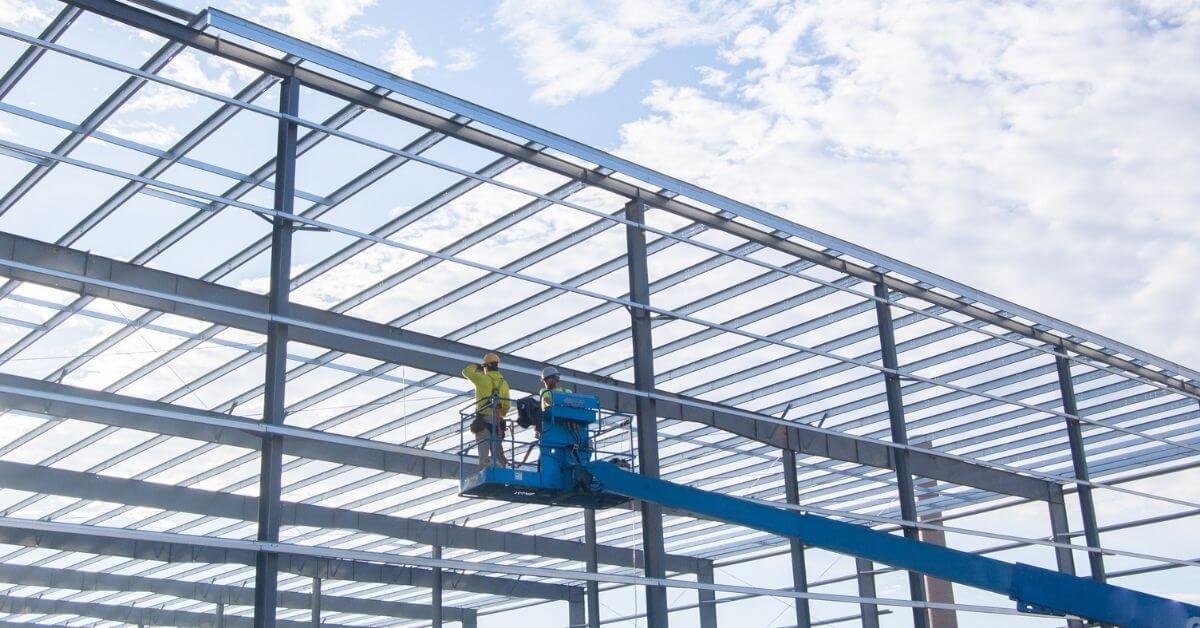
Typical commissions include agricultural and equipment-support buildings, small retail and service centers for travelers, contractor yards and shops, community and school space, and light industrial or storage buildings. Many of these are clear-span structures, and our clear-span rigid frame buildings work covers the foundation, erection and enclosure on those buildings.
Heavy-vehicle sites need pavement designed for loads. Truck courts, dock aprons and equipment yards use thicker sections than a parking lot, and the trade partners for truck courts and dock aprons build them with attention to subgrade, joints and drainage. A properly built yard saves years of maintenance.
Buildings That Suit the Location
A pre-engineered metal building is often the most cost-effective choice for shops, storage and light industrial use. For travelers and the local workforce, a modest retail shopping center or a quick-service building can make sense if traffic counts support it. Where more equipment storage is needed, self-storage facilities also appear on the plains.
We will test the market assumptions with you rather than just build the first idea. A short conversation about expected traffic, tenants, and financing can change a project's program before design begins, and it costs the owner nothing.
Sequencing Work Across a Wide Footprint
Large parcels invite the temptation to start everything at once. We prefer to sequence: access road and erosion control, rough grading, utilities, foundations, then enclosure, so each phase leaves the site stable for the next. Staging the work this way helps with inspections as well, because the county inspector can approve a complete phase on a single visit.
Operators in freight, equipment and agricultural supply often need to be open before a season begins, so we work backward from that date. The logistics and distribution industry page explains how we build schedules around peak seasons, and the same approach works for any seasonal business on the plains. We list the decisions the owner needs to make and the dates by which they must be made.
Open-Country Safety Practices
Wind, lightning and winter storms are the hazards we watch most closely on an exposed site. We set work-stoppage thresholds for crane lifts and roofing, and we use weather forecasts to schedule concrete and exterior work. On long days with a remote crew, hydration, shade and first-aid access are planned in advance.
Long distance from emergency services is a factor too. We post site addresses and nearest-hospital routes in the safety plan, and we make sure each crew knows how to summon help and guide responders to the site. It takes an hour to prepare and may matter very much if it is ever needed.
Find Out Which County Reviews Your Parcel
Send us the parcel number and your intended use. We will confirm the reviewing county, outline the permits you need and give you a practical schedule from application to occupancy.
Questions Owners Ask
How do I know whether Adams or Arapahoe County has my parcel?
The county assessor and each county's planning office can confirm it, and we check before any drawings are issued. The answer sets the code edition, fee schedule and review process, so it shapes the whole project.
Will the code change while my project is in design?
It might. The tracker lists an Adams County adoption of the 2024 I-codes and an Arapahoe County update expected in the 2027 cycle. We ask the reviewing county which edition applies on the filing date and track announced changes so design is not caught off guard.
Does a rural site cost more to build on?
Often yes, mainly because of mobilization, long utility runs and fewer local subcontractors. Some savings offset that, such as lower land cost and less site congestion. We provide a transparent estimate so the comparison is clear.
Is the historic railroad significance a permitting issue?
The Comanche Crossing site east of town is listed on the National Register of Historic Places, so we check whether any parcel is near it or in an overlay area before design starts. Most parcels are unaffected, but confirming it avoids a delay.
How do you handle winter construction?
We schedule foundations and enclosure before the coldest weeks where possible, and we use blankets, heaters and admixtures for cold-weather concrete when needed. We also set milestones that allow for weather delay.